Balloon Game: The Complete Australian Guide to the Crash Game, the Pymetrics Test and Kids' Balloon Games
Last updated: February 2026 · Reviewed by: the iGaming editorial and analysis desk · Audience: 18+ (gambling sections)

Last updated: February 2026 · Reviewed by: the iGaming editorial and analysis desk · Audience: 18+ (gambling sections)
18+ only. The gambling sections of this guide are written for adults. Gambling involves financial risk and no strategy can produce a guaranteed profit. If gambling is causing you or someone you know harm, contact Gambling Help Online on 1800 858 858 (Australia, free, 24/7).
Three very different audiences type "balloon game" into Google. Here is how this guide is split, so you can jump to the part that answers your question.
A short word on method, because "balloon game" is one of those queries where copied claims travel fast and verification does not.
Everything in the gambling sections was checked against three types of source: provider documentation from SmartSoft Gaming and BGaming, live operator specification and help pages, and independent material such as Australian regulator research, parliamentary inquiry evidence and published mathematical analysis of provably fair crash games. Where a figure appears in one place and contradicts another, we say so rather than picking the prettier number.
Three rules shaped the editing:
Figures such as RTP, bet limits and payout caps are set by providers and operators, and they change without notice. Treat the numbers here as a map, and the in-game info panel as the territory.
Australia is one of the highest-spending gambling markets in the world per capita, and the composition of that spend has shifted decisively online over the past decade. Broadly, roughly 70% of online gambling turnover flows through wagering (sports and race betting), around 20% through online casino products, and the remainder through lotteries and other forms. Crash games such as Balloon sit under the online casino umbrella rather than the wagering umbrella, and that distinction matters enormously for legality, consumer protections and dispute resolution in Australia.
Participation is not static. Regulator research indicates that online betting participation has continued to climb year on year:
"In 2024, more than a third of adult Australians (36%) gambled online, up from 32% in 2023." — ACMA, How Australians Use the Internet (2024). https://www.acma.gov.au/how-australians-use-internet
Growth in participation is not, by itself, evidence of harm. The concerning pattern is the concentration of risk among online participants. In New South Wales survey work, online gamblers were nearly five times more likely to experience moderate-to-high-risk gambling, at 9.2%, compared with 2.1% among those who did not gamble online.
"Online poker participants recorded 59.6% moderate-to-high risk of harm, the highest rate of any online form measured." — NSW Gambling Survey 2024, NSW Government. https://www.gambleaware.nsw.gov.au/research-and-resources/nsw-gambling-survey
Fast, continuous, high-frequency products cluster at the risky end of that spectrum, and crash games are structurally in that family. A Balloon round can be started and resolved inside a few seconds. There is no forced pause, no reel animation of meaningful length, and no natural end point to a session other than the one a player imposes.
Why the format fits modern phone use (with a caveat). Balloon's design (short, intense rounds, a simple one-button interaction and continuous volatility) maps neatly onto mobile usage patterns, where people cycle between social apps, messaging and quick gambling sessions throughout the day. One clarification, though: we could not locate a peer-reviewed study measuring session interleaving specifically for crash games, so treat this as a structural observation about product design rather than a measured behavioural finding. What is documented is that fast-cycle, continuous products are consistently over-represented in harm statistics relative to their share of turnover, and that mobile access removes the friction of travelling to a venue.
For Australian readers, three practical consequences follow from this landscape:
A crash game is a single-variable gamble against time. A multiplier begins at approximately 1.00x and rises continuously. At a randomly predetermined point the round "crashes": the plane flies away, the rocket explodes, or, in Balloon's case, the balloon bursts. If you have cashed out before the crash, you are paid stake × multiplier at the moment of exit. If you have not, you lose the stake in full. There is no partial loss and no consolation outcome.
The crash point is generated before the round begins by a random number generator, typically with a provably fair hash-chain implementation or a certified RNG audited by a testing house. The distribution is engineered so that the theoretical return to player emerges over an enormous number of rounds. For a game with RTP R, the probability of a round surviving to multiplier m is approximately R/m. With R = 0.97:
| Target multiplier | Approx. probability of reaching it | Approx. rounds between hits |
|---|---|---|
| 1.20x | 80.8% | 1.2 |
| 1.50x | 64.7% | 1.5 |
| 2.00x | 48.5% | 2.1 |
| 3.00x | 32.3% | 3.1 |
| 5.00x | 19.4% | 5.2 |
| 10.00x | 9.7% | 10.3 |
| 50.00x | 1.94% | 51.5 |
| 100.00x | 0.97% | 103 |
So the chance of hitting 10x is about 0.97/10, roughly 9.7%. This is not a marketing estimate. It has been checked against live data:
"Observed cash-out frequencies matched theoretical predictions within a few percentage points across thousands of recorded rounds." — Dubach, Mathematical Analysis of a Provably Fair Crash Game (2023). https://arxiv.org/abs/2309.11266
The multiplier distribution is heavy-tailed, which means very high multipliers occur with predictably low frequencies but can be striking when they appear.
"The tail exponent of the multiplier distribution was estimated at approximately 1.98, effectively the theoretical value of 2.0 embedded in the RTP model." — Dubach, Mathematical Analysis of a Provably Fair Crash Game (2023). https://arxiv.org/abs/2309.11266
Two practical readings of that table. First, low-multiplier strategies win often but grind: at 1.2x you need roughly five wins to recover one loss, and a run of six consecutive crashes below 1.2x (probability of about 0.19⁶, so around 1 in 21,000 for a specific sequence, yet far from rare across a long session) is enough to erase a long grind. Second, high-multiplier strategies are not "wrong". They simply relocate the same house edge into a lumpier variance profile. Expected value is identical at every target; only the shape of the distribution changes.
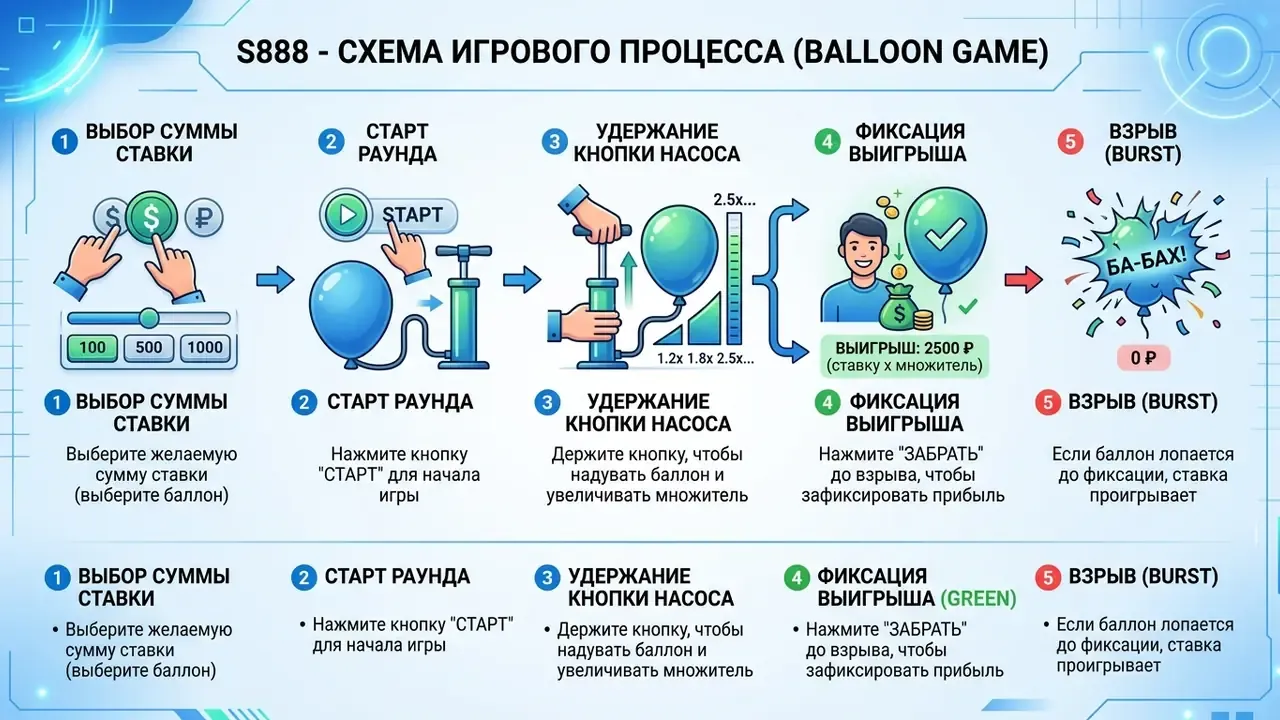
Balloon is SmartSoft Gaming's pump-and-release interpretation of the crash format, released on 5 June 2019 and still one of the studio's most widely distributed instant-win titles alongside JetX. SmartSoft describes it as a crash-style instant-win game built for quick rounds and high engagement: as the balloon inflates the multiplier increases, and the player must bank before it pops.
What separates Balloon from Aviator-style crash games is the inverted control scheme. In a conventional crash game you place a bet, watch a rising curve, and click "cash out" during the round. In Balloon you effectively determine the duration of the round yourself, in real time, with a sustained physical input: you press and hold the pink pump button, and the balloon inflates only while you hold. Release, and the round ends immediately with the displayed prize credited.
Rather than attributing the feel of this to unnamed "reviewers", here is the observable design difference. The hold gesture converts cash-out from a discrete decision into a continuous one. In a click-based crash game there is a single moment of commitment; in Balloon the decision is being re-made continuously for as long as your finger stays down, which changes the tempo and the felt experience of the risk without changing the underlying mathematics one bit.
Publisher and licensing. Smartsoft Limited (company registration number C 99015, registered at Level 3, Suite 2746, Tower Business Centre, Tower Street, Swatar, Birkirkara, Malta) is a licensed and regulated B2B supplier under Malta Gaming Authority licence MGA/B2B/925/2021. That B2B licence covers the supply of certified game content to operators. It is not a licence to accept bets from players, and it does not make any given casino lobby lawful in Australia.
Some casino-facing write-ups claim that "no fairness disputes have ever been confirmed" across the game's years in market. We have removed that framing, because absence of published disputes is an argument from silence rather than evidence of fairness. The verifiable statements are narrower and more useful: SmartSoft holds an MGA B2B critical gaming supply licence, MGA-licensed suppliers must have their RNG and game maths certified by an approved testing laboratory, and the game's information panel discloses its RTP configuration to the player.
RTP: reconciling the conflicting numbers. You will see 95.98%, 97% and "up to 98%" attached to SmartSoft Balloon depending on where you look. All three can be simultaneously present in the market because providers routinely ship several RTP builds of the same title, and operators choose which build to deploy. The figure that governs your session is the one printed in the in-game help and info screen of the specific lobby you are in. If a lobby does not disclose it, treat that as a red flag.
Interface elements. Balloon's control surface is deliberately minimal: a balloon-selection strip along the bottom (each balloon representing a fixed stake denomination and a different rate of multiplier growth), the pump button, and on the left a personal bet history plus a leaderboard of the biggest rounds by other players. Balloon value can be changed between rounds but not during them. More expensive balloons grow the prize faster, which is the game's built-in risk dial.
Balloon Mania (released 27 May 2025) is a different game with a confusingly similar name, and a large share of "balloon game" searches actually land on it. It is a casual instant-win title, not a crash game. Coloured balloons float on screen; hovering over one reveals its multiplier and its "chance to win" on the first click; you click a balloon repeatedly until it bursts and releases coins, and the payout is stake × that balloon's multiplier.
Published specifications: RTP 97%, low volatility, hit rate 1.13, multipliers of x1.1, x1.5, x2, x4, x8, x16, x32 and a maximum of x64, maximum win €256,000, game ID BalloonMania. It includes a click counter (attempts per balloon are remembered), a random spin mode and a customisable autoplay with balloon selection and stop conditions. BGaming's content is supplied by Stable Games Ltd (206 Wisely House, Old Bakery Street, Valletta VLT 1451, Malta) under MGA B2B critical gaming supply licence MGA/B2B/785/2020, and the studio states that all titles use certified RNG technology.
The practical difference for a player: Balloon Mania is a low-volatility, frequent-small-win experience with automation, while SmartSoft's Balloon is a medium-volatility, manual-timing experience with no autoplay at all. Different games, different tempo, same negative expectancy.
| Parameter | SmartSoft Balloon | BGaming Balloon Mania |
|---|---|---|
| Genre / type | Crash / instant-win "fast game" | Casual instant-win |
| Release date | 5 June 2019 | 27 May 2025 |
| Provider licence | MGA/B2B/925/2021 (Smartsoft Limited, C 99015) | MGA/B2B/785/2020 (Stable Games Ltd) |
| RTP | Commonly listed 95.98%; configurable builds quoted up to 97–98% | 97.00% (fixed) |
| Volatility | Medium | Low |
| Hit rate | Not published by provider | 1.13 |
| Max multiplier | Provider maths ceiling reported at x10,000 | x64 |
| Max win | Bounded by operator payout cap (examples seen: €10,000 or ₦100,000 equivalents) | €256,000 |
| Multiplier ladder | Continuous, unbounded until burst | Fixed: x1.1, x1.5, x2, x4, x8, x16, x32, x64 |
| Core input | Press and hold the pump button | Click or tap a chosen balloon |
| Stake entry | Fixed preset balloon denominations only | Standard bet field |
| Autoplay | None | Customisable autoplay plus random spin |
| Bet currency | Frequently denominated in EUR; balances in other currencies are auto-converted at the operator's prevailing rate | Operator currency |
| Leaderboard / social layer | Yes (top rounds, bet history) | No |
| Mobile | HTML5, fully responsive | HTML5, fully responsive |
Resolving the operator-limit contradiction. One operator page we reviewed lists "Maximum Win 100x" in its specification header while the body copy of the same page promises multipliers that "could reach 10,000x your stake", alongside a minimum bet of ₦50 and a maximum bet of ₦100,000. These are not the same kind of number and should never be presented as interchangeable:
If the operator cap is reached first, the excess is not paid. Read the operator's own payout-limit clause before chasing a large multiplier, not the game's marketing copy.
⚠️ The single most common beginner error: tapping instead of holding. A quick click ends the round almost instantly at the minimum multiplier (around x1.01), which feels like a bug but is simply the mechanic working as designed.
Known interface limitations to plan around: no autoplay, no custom stake amounts, no display of what the round's maximum multiplier would have been (you never learn how close you were), and only two outcomes per round. Some players value that austerity; others find it repetitive. Both reactions are reasonable.
Free-play or "demo" versions of casino games are a fixture of the industry. They serve legitimate purposes: letting a player learn a control scheme without financial consequence, letting a reviewer document mechanics, letting a developer showcase a title to operators. Most reputable providers, SmartSoft and BGaming included, publish playable demos of their instant-win games, and many operators make demo mode available across their entire casino category.
The evidence on whether demos act as a gateway to monetary gambling is more nuanced than either industry or advocacy framing suggests. Australian research examining a range of simulated gambling products found an important sequencing distinction: for products such as demo slots and social casino games, first play tended to occur after individuals had already engaged in monetary gambling.
"Loot boxes and gambling-like video games typically preceded monetary gambling, whereas casino demo games generally followed it." — Russell et al., Journal of Behavioural Addictions (2023). https://doi.org/10.1556/2006.2023.00009
That ordering matters for how a demo should be positioned. A Balloon demo is best understood not as a recruitment tool for the never-gambled, but as a rehearsal environment for people already gambling, which is precisely why free play deserves the same discipline as real play (see the checklist in 3.3).
The same body of research found that engagement in most simulated gambling products was associated with greater harm from monetary gambling.
"The study covered 1,026 young people and assessed the association between simulated gambling products and harm from monetary gambling across a broad range of forms." — Russell et al., Journal of Behavioural Addictions (2023). https://doi.org/10.1556/2006.2023.00009
Longitudinal work on adolescents who played simulated gambling games found they were approximately 40% more likely to gamble with real money at ages 18 or 19, compared with peers who did not play such games, after controlling for other factors. The commercial scale of this category in Australia is substantial:
"Australia ranked fourth globally for spending on social casino games, at approximately $115.8 million in the first half of 2022." — Australian parliamentary inquiry into online gambling (2023). https://www.aph.gov.au/Parliamentary_Business/Committees/House/Social_Policy_and_Legal_Affairs/OnlineGambling
Two mechanisms are usually proposed. Normalisation: repeated exposure to gambling structures, sounds and reward schedules in a consequence-free setting reduces their perceived seriousness. Distorted calibration: demo builds can, and sometimes do, run on inflated return settings, or they are simply experienced during a favourable variance run, generating an unrealistic expectation of hit frequency.
Treat balloon free play as a documented test, not entertainment. Record it the way you would record any test: with a name, a date, the conditions, measurable results and a signature (yours).
| Step | What to do | What "pass" looks like |
|---|---|---|
| 1. Verify authenticity | Confirm the game loads from the provider (SmartSoft or BGaming) inside a lobby that names the provider | Provider name, game ID and licence visible |
| 2. Capture the specification | Screenshot the RTP, max win and rules panel | Figures documented, not remembered |
| 3. Learn the input | Practise hold-and-release 30 times without targeting a multiplier | Zero accidental single-tap rounds |
| 4. Measure your own timing | Log 100 rounds: target multiplier, actual exit, outcome | Median exit within ±0.1x of your intended target |
| 5. Test your rule set | Run your planned strategy for 200 rounds with a notional bankroll and a notional stop-loss | Stop-loss respected every time, no exceptions |
| 6. Stress-test the downside | Note your longest losing streak and deepest drawdown | You have seen a streak long enough to frighten you |
| 7. Sanity-check expectations | Compare your demo hit rate to the theoretical table in 2.1 | Any large positive divergence is variance, not skill |
| 8. Recalculate for real stakes | Multiply your worst demo drawdown by your intended real stake | The resulting dollar figure is genuinely affordable to lose |
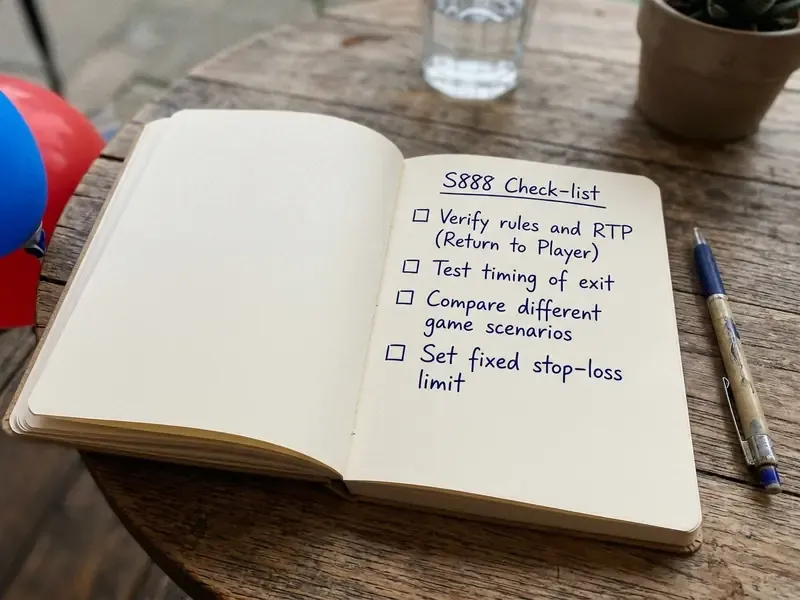
What a demo can and cannot test. It can test the control scheme, the tempo, your reaction latency, your discipline under a rule set, and the emotional pull of a near-miss. It cannot test the psychological weight of real money, cannot validate a strategy's profitability (nothing can, at negative expectancy), and cannot tell you how the operator handles withdrawals or disputes. Demo balance is not a proxy for solvency, and demo losses do not produce tilt. Which is exactly why demo discipline overstates real discipline.
Disclaimer. This information is general in nature and is not a substitute for professional advice. Online gambling carries financial risk, and the law varies by jurisdiction. If you are experiencing problems with gambling, contact Gambling Help Online: 1800 858 858.
Under the Interactive Gambling Act 2001 (Cth), it is an offence to provide interactive online casino-style gambling services to a person physically present in Australia. Crash games sit squarely inside that prohibition. Enforcement is directed at operators and affiliates, not at individual players, and the ACMA maintains an ongoing programme of website-blocking requests to Australian ISPs. Related measures have tightened the environment further, including the prohibition on the use of credit cards and credit-linked payment products for online wagering.
The consequences for a player who nonetheless plays offshore are practical rather than criminal: no Australian regulator can compel payment of a disputed win, no domestic ombudsman can intervene, national self-exclusion via BetStop does not reach offshore casino lobbies, and payment reversals are difficult once funds have been converted.
If you proceed despite the above, the sequence matters. Ensuring that any operator used has clear licensing information, established payment rails and stated policies on withdrawals and dispute resolution is a basic safeguard before even considering gameplay strategy. Choosing a licensed operator is a due-diligence exercise, not a branding preference.
A realistic onboarding sequence:
Payment methods commonly encountered by Australian users (general comparison):
| Method | Deposit speed | Withdrawal speed | Practical notes |
|---|---|---|---|
| Bank transfer / PayID-style rails | Minutes to 1 day | 1–5 business days | Traceable; conversion fees apply if the account is not in the site's currency |
| Debit card | Instant | 1–5 business days | Credit cards are prohibited for online wagering in Australia; card issuers may decline gambling MCC codes |
| E-wallets (Skrill, Neteller and similar) | Instant | Hours to 2 days | Often excluded from welcome bonuses; wallet-level fees |
| Prepaid vouchers | Instant | Not available for withdrawal | Deposit-only; forces a second method for payouts |
| Cryptocurrency | Minutes | Minutes to hours | Irreversible; adds price volatility on top of gambling volatility |
On volatility narratives. Some player-facing guides illustrate crash volatility with personal anecdotes, for example a near-perfect win streak followed by a large two-round loss. We have deliberately removed the anecdote and kept the structural point, because a single unverifiable story is a weak evidence base and, worse, it invites the reader to pattern-match on someone else's variance. The verifiable statement is this: in a heavy-tailed distribution, long favourable runs and abrupt severe drawdowns are both expected features, not anomalies, and neither carries information about what happens next.
Bonus terms are where crash games most often surprise players. Typical market conditions for welcome offers, free spins and cashback fall in these bands:
| Term | Typical range | Why it matters for Balloon |
|---|---|---|
| Wagering requirement | 20x–50x bonus (sometimes bonus plus deposit) | Determines total turnover needed before withdrawal |
| Max bet during wagering | €5–€10 per round | Balloon's fixed presets may not include a compliant denomination, and breaching this voids the bonus |
| Game weighting / contribution | Slots often 100%; crash and instant-win games frequently 0%–10% | Rounds of Balloon may contribute almost nothing toward wagering |
| Validity period | 7–30 days | Low contribution plus a short window is often mathematically unclearable |
| Max cash-out from bonus | Commonly capped (for example 3x–10x bonus) | A large multiplier win can be truncated to the cap |
| Excluded payment methods | E-wallets frequently excluded | A deposit method chosen before reading terms can disqualify the offer |
The practical rule: before accepting any bonus, find the "game contribution" table and locate the crash or instant-win row. If Balloon contributes 0%, the bonus is not a Balloon bonus, regardless of what the banner says. Cashback offers, which return a percentage of net losses with low or no wagering, are usually the only promotion category that interacts cleanly with crash play, though they also reward continued losing, which is worth sitting with for a moment.
The structural risk in Balloon is round speed. Protective measures must therefore be pre-committed and external to the moment of play:
Where to get help in Australia: Gambling Help Online, 1800 858 858, 24/7, free, confidential, with online chat and email counselling; Lifeline 13 11 14 for crisis support; GambleAware (NSW) for state-based services and self-help resources; financial counselling via the National Debt Helpline 1800 007 007.
Every configuration of Balloon has an RTP below 100%. That single fact is sufficient to prove that no betting pattern, stake progression, timing rule or "system" can produce a positive long-run expectation, because the expected value of a sum of negative-expectation bets is negative regardless of how the stakes are ordered or sized. Bet sizing and cash-out targets change variance, the shape and violence of the ride, not expectancy.
Disclaimer. This information is general in nature and is not a substitute for professional advice. No strategy guarantees a profit in games with negative mathematical expectation.
Two further points close off the usual escape routes. First, RNG output is memoryless: a run of early bursts does not make a long round "due", and a run of long rounds does not make a burst imminent. Second, the crash point is generated before the round starts, so no in-round information (animation speed, colour change, leaderboard activity) can be predictive, because there is nothing left to predict.
What a balloon strategy can legitimately do is three things: cap the worst plausible outcome, define an exit, and make the session's shape match what you actually want from it. That is risk management, and it is worth doing well.
The core mechanism of bankroll control is fractional staking: risking a fixed small percentage of the current bankroll per round, so that stake size shrinks automatically as the bankroll shrinks.
A common rule is 1% per round, so a $200 bankroll would imply a $2 maximum bet. As losses occur and the bankroll shrinks, this rule automatically forces stakes down, slowing the rate of depletion.
"Fractional stakes in the 0.5–2% band of the session bankroll reduce the probability of a catastrophic losing run within a single session." — CrashGames.guide, Bankroll Management for Crash Games (2024). https://crashgames.guide/bankroll-management
Note the friction specific to Balloon: because stakes are fixed presets, exact 1% sizing is usually impossible. The workable adaptation is to choose the bankroll to fit the preset. If the smallest balloon is $0.50, a 1% rule implies a minimum bankroll of $50 for that denomination, and anything less means you are structurally over-betting from round one.
Why progressions fail. The Martingale idea, doubling after each loss so that one win recovers everything, collapses on two independent grounds. Mathematically, the required stake grows exponentially: a starting 1-unit bet would have escalated to a 256-unit liability on round nine.
"Across 100 sessions a player will almost certainly encounter at least one eight-round losing streak, which makes progressions catastrophically dangerous." — CrashGames.guide, Bankroll Management for Crash Games (2024). https://crashgames.guide/bankroll-management
Mechanically, it is not even executable in SmartSoft's Balloon: the interface has no free-text stake field, only a small ladder of preset balloon denominations. You cannot double from $1.30 to $2.60 if $2.60 is not on the strip. This is one of the rare cases where a design limitation protects the player from themselves.
As a general principle for crash games at online casinos, the lower the percentage of the session bankroll risked per round and the tighter the stop-loss and time limits, the lower the risk of extreme losses, and the longer a fixed budget lasts as entertainment rather than as exposure.
A minimal, testable rule set:
The pump-style balloon problem has a clean analytical treatment, and it is genuinely useful for intuition even though the casino version is a continuous-time crash game rather than a discrete pump count. Assume the balloon's maximum capacity M is unknown but uniformly distributed, say "not above 20, and any value below equally likely". Then, having survived i pumps, the probability of bursting on the next pump is 1/(21 − i), and the expected value of pumping again is:
E(pump) = [(20 − i) / (21 − i)] × (i + 1)
which must be weighed against the certain payoff of banking now, i.
Worked example at the top of the range: at 19 pumps, the surviving possibilities are M = 20 and M = 21, equally likely, so
E(pump) = P(M=20)·0 + P(M=21)·20 = ½ × 20 = 10
against a certain 19 from banking, which is clearly worse. At 18 pumps, E(pump) = ⅔ × 19 ≈ 12.67, still worse than banking 18. Working down the curve, break-even occurs at 10 pumps: below that, pumping dominates; above it, banking dominates. The credit for this derivation belongs to Gijs Koot's public analysis of the pumping-balloon risk assessment (2021), which also notes the harder open problem: the exploration and exploitation trade-off when you have a stock of balloons and must sacrifice some to learn the capacity distribution.
How to transfer this to the casino game, and how not to. The break-even-at-half-the-maximum result is a property of the uniform prior, not a universal law. The casino crash distribution is not uniform. It is heavy-tailed by design, with RTP baked in, which is why the expected value of continuing is always slightly negative rather than positive-then-negative. The transferable insight is structural: the marginal value of one more unit of risk declines as you go, while the marginal probability of ruin rises. In a fair uniform game there is an optimum; in a minus 3% game there is only a choice of variance profile.
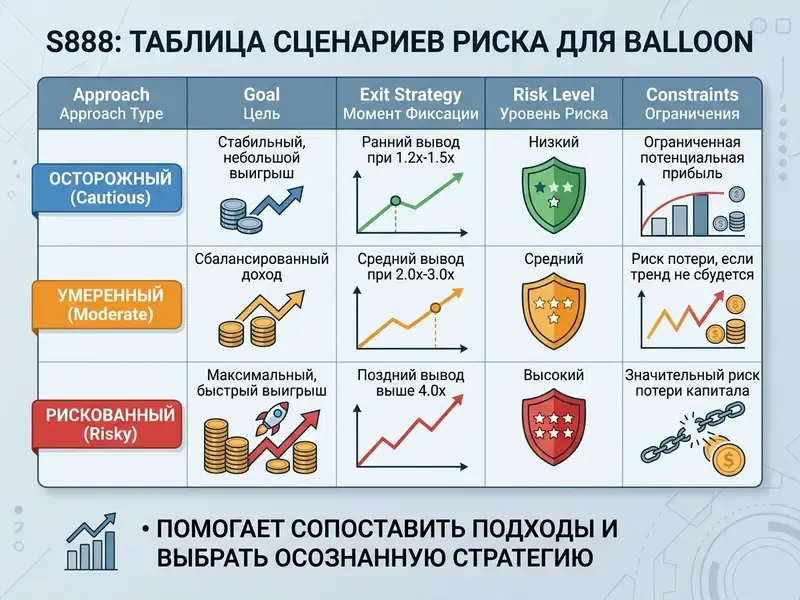
The table below is a planning tool, not a prediction. Probabilities use the R/m approximation at R = 0.97 and assume a $100 session bankroll with $1 rounds.
| Scenario | Target exit | Approx. win probability per round | Expected pattern | Typical failure mode |
|---|---|---|---|---|
| Low risk | 1.20x–1.50x | 65%–81% | Many small wins; slow grind; low drawdown volatility | Death by a thousand cuts: a modest cluster of early bursts erases dozens of wins; boredom-driven target creep |
| Moderate risk | 2.00x–3.00x | 32%–49% | Roughly one win in two to three rounds; visible swings | Streaks of 6 to 10 losses are ordinary; players raise stakes to "catch up" |
| High risk | 10x and above | 9.7% or less | Long dry spells punctuated by large hits | 30 to 50 consecutive losses are entirely normal; bankroll gone before the tail arrives |
Expected loss is identical in all three rows: about 3 cents per dollar staked at 97% RTP. The rows differ only in how that loss is delivered. Read the table as a description of temperament, not of profit.
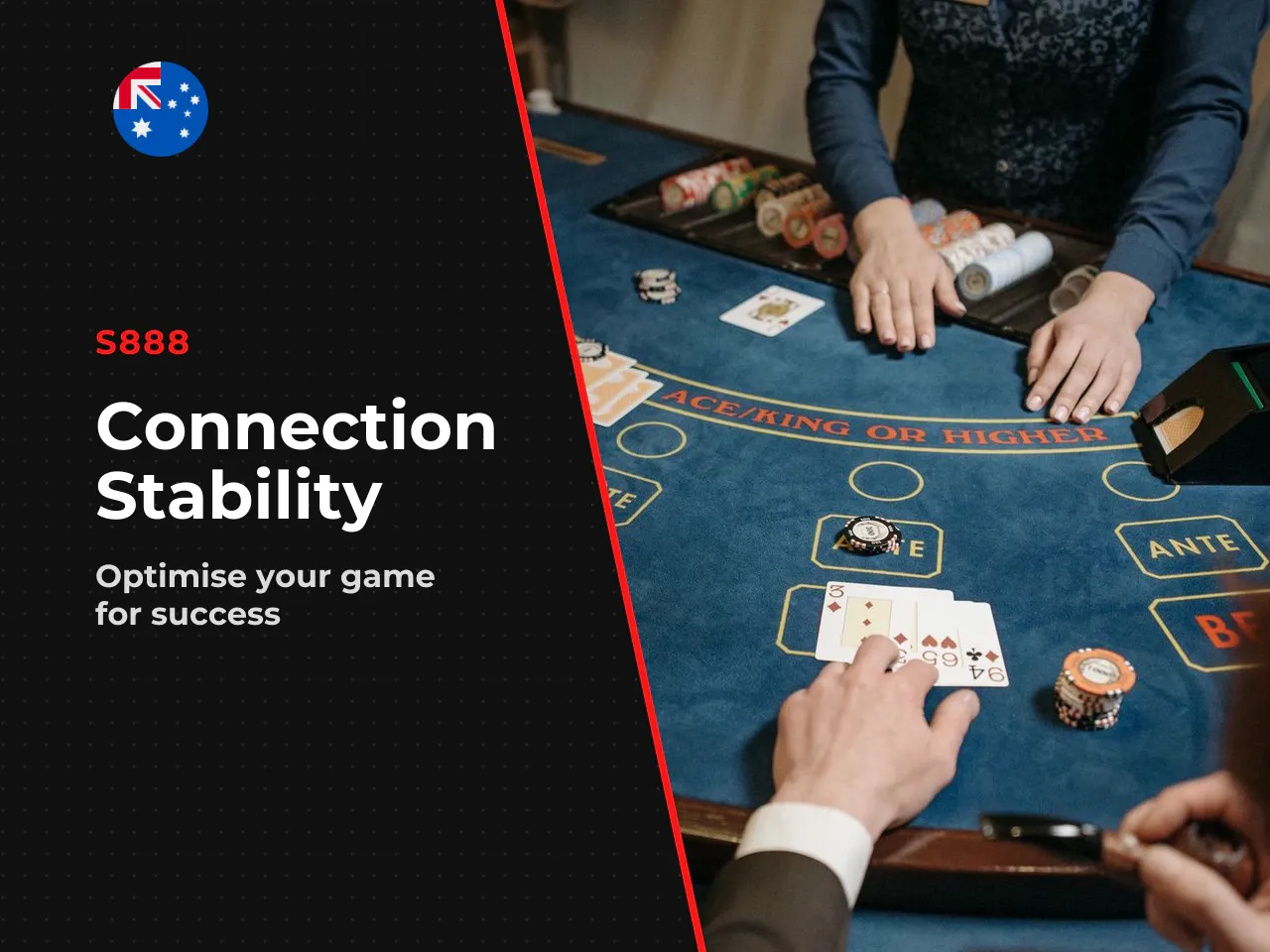
Myth 1: "There is a glitch or hack that forces long rounds." Posts and videos claiming secret mechanics in Balloon are engagement bait. SmartSoft is an MGA-licensed B2B supplier operating under certified RNG requirements, and the outcome of each round is determined before your first pump. Empirical analysis of crash-game round data supports this directly, with the tail exponent of the multiplier distribution estimated at approximately 1.98, very close to the theoretical 2.0.
"The close agreement between empirical and theoretical distributions is inconsistent with the presence of exploitable glitches or non-random patterns." — Dubach, Mathematical Analysis of a Provably Fair Crash Game (2023). https://arxiv.org/abs/2309.11266
Myth 2: "Predictor software or a Telegram signals bot can tell me when to cash out." These fall into three buckets, all bad: (a) a plain scam that takes a subscription fee for random numbers; (b) malware or a credential harvester, often distributed as an APK "predictor" requiring accessibility permissions; (c) a phishing funnel that asks you to log into a cloned casino page so the "bot can connect to your account". There is no legitimate technical pathway: the crash point is server-side and pre-generated, so a client-side application cannot read it. If prediction worked, the seller would use it rather than sell it for $30 a month.
Myth 3: "Balloon is a slot machine, so slot strategies apply." It is not a slot. There are no reels, no paylines, no bonus rounds and no scatter mechanics. Volatility management, not line selection, is the only lever.
Myth 4: "Hot and cold streaks are real, so I should follow the leaderboard." The leaderboard shows other players' completed outcomes. It has zero predictive content, and its presence in the interface is a retention feature, not an analytics tool.
Myth 5: "A higher RTP means I will win." A 97% RTP still means a designed 3% loss on turnover. Turnover, not deposits, is what the edge is applied to, which is why fast games extract more from the same deposit than slow ones do.
Myth 6: "The demo is rigged to be generous, so real play must be rigged to be harsh." The verifiable concern is narrower: demo builds may be configured with a different RTP setting, or simply experienced during favourable variance. Compare the RTP printed in the demo's info panel with the RTP printed in the real-money lobby. If they differ, believe the real one.
Red-flag checklist for fake Balloon software and clone lobbies:

Both SmartSoft Balloon and BGaming Balloon Mania are HTML5 titles designed to render responsively across phone, tablet and desktop without a separate build. In practice this means a modern mobile browser (Safari on iOS, Chrome on Android) can run the game full-screen with touch input, and no installation is technically required when the service is delivered as a mobile website or progressive web app.
For a hold-to-pump game, the browser path has one genuine advantage and one genuine drawback. The advantage: nothing to install, nothing to grant permissions to, and no sideloaded package to trust. The drawback: browser chrome, pull-to-refresh gestures and incoming notifications can all interfere with a sustained touch, and an interrupted hold is an unintended cash-out.
Some operators distribute the entire casino as a native application because their domain is blocked, or because app distribution improves retention. There is no standalone Balloon app. The game only ever appears inside an operator's client, so any "balloon download" is really an operator client download.
Android (APK sideloading). The typical instruction set is: download the APK from the operator's own site, open it, and grant permission to "install from unknown sources", since these clients are generally not distributed via Google Play. Operators note that such builds update themselves and can bypass regional restrictions without a VPN. The security trade-off is real and should be stated plainly: sideloading removes Play Protect's distribution-layer vetting, the permission grant persists for that installer source, and a malicious clone APK is one of the most common vectors for credential theft in this category. If you sideload, download only from the domain you verified independently, check the package name and signature, and never grant accessibility or SMS permissions to a gambling client.
iOS. Installation goes through the App Store where the operator has a listing, following the instructions on the operator's site. Where no listing exists, operators direct users to a web-app or home-screen shortcut instead. App Store distribution keeps Apple's review layer intact, which is a meaningful advantage over sideloading.
Progressive web app (PWA). A middle path: add the mobile site to the home screen for a full-screen, app-like experience with no package installation and no permission grants. For a one-button game this is often the best of the three options.
Feature parity. Operator apps commonly add biometric login, authenticator-app support and quick sign-in, and no separate registration is needed, since you log into the existing account. Gameplay mechanics are identical across browser, PWA and native app. Nothing about Balloon's maths changes with the container.
Because cash-out in Balloon is a real-time physical action, network performance is not a cosmetic issue. Practitioner guidance for crash players is explicit on this point, noting that a lag spike of even fractions of a second can make a player miss a cash-out.
"Even a fraction-of-a-second delay between the release gesture and server processing can shift the actual exit point above the intended one." — Trustlab, Practical Guide for Canadian Crash Players (2024). https://trustlab.ca/crash-game-guide
Practical mitigations, in order of impact:
A large share of "balloon game" searches has nothing to do with gambling. The Pymetrics Balloon Game is a gamified psychometric assessment, a commercial descendant of the Balloon Analogue Risk Task (BART) used in psychological research, deployed by major employers as part of a suite of Pymetrics Games. (Pymetrics was acquired in 2022 by a talent-assessment company and the games were folded into its assessment platform.) If a recruiter has sent you a link, this is the section you want.
Risk-taking. The obvious axis. A candidate who banks early on every balloon, collecting nearly all 39 but earning little, is scored as cautious. A candidate who pops many balloons but banks larger amounts is scored as adventurous.
Learning. The less obvious axis, and the one most candidates miss. Explosion patterns are not fully random: each balloon colour carries a different burst probability.
"Each balloon colour has a different explosion pattern... blue balloons have a chance of 1:10... yellow ones have a chance of 1:25 (these are not the real numbers)." — Maya Strauss, Psychometric Test Developer, JobTestPrep (2026)
The algorithm is watching whether you notice the colour and risk association, and adapt within the session. A candidate whose pump counts diverge by colour as the game progresses demonstrates learning. A candidate who pumps identically regardless of colour does not, no matter how much money they bank.
First, determine the profile the role rewards. Read the job ad, the position description and the employer's stated values. Trading, sales, growth and entrepreneurial roles typically reward the adventurous profile; audit, compliance, safety, clinical and quality roles typically reward the cautious profile.
Max Money strategy (adventurous profile):
Max Balloons strategy (cautious profile):
The maths behind both. The break-even derivation in Section 5.3 applies far more cleanly here than to the casino game, because there is no built-in house edge. The Pymetrics and BART structure is a genuine exploration and exploitation problem. With a uniform prior capped at 20, the crossover between "pump again" and "bank now" sits at around 10 pumps. Because you have 39 balloons rather than one, spending two or three of them purely on exploration is rational: information about colour-specific capacity has value across all remaining rounds. The size of that exploration budget scales with the number of rounds remaining, which is why sacrificing balloons early is efficient and sacrificing them late is not.
Consistency matters more than either target. These assessments are scored as a profile, not a score. Erratic play, cautious for ten rounds, reckless for five, then cautious again, reads as noise and is generally worse than either coherent strategy executed to the end.
Balloons are among the cheapest and most versatile pieces of party equipment available. Below are ten classic games plus a water-balloon set, followed by safety guidance that genuinely matters.
Please consider the environment and wildlife by collecting all balloon fragments and disposing of them appropriately. You could even turn this into a game.
Balloons are cheap, portable and reliably entertaining. And the best outcome is usually a parent supervising with a coffee in hand, then getting dragged into the game anyway.
Transparency about evidence quality is part of the value of a guide like this. The following statements appear widely in competing coverage, and each has been reformulated or flagged rather than repeated as fact.
| Claim as commonly published | Status | How we handled it |
|---|---|---|
| "Balloon is available in more than 6 variations from different providers." | Needs verification | Replaced with a named inventory: SmartSoft Balloon and BGaming Balloon Mania, plus unaffiliated look-alikes. Abstract counts are not verifiable. |
| "Over seven years of live operation there have been no confirmed fairness disputes." | Argument from silence | Replaced with verifiable licensing facts (MGA/B2B/925/2021) and the certification obligations that attach to them. |
| "Reviewers say the hold-and-release rhythm feels different from Aviator." | Unsourced attribution | Rewritten as a structural observation about continuous versus discrete cash-out decisions. |
| A personal anecdote of a "97% win-rate streak followed by a C$500 loss over two rounds." | Unverifiable anecdote | Removed, and replaced with the general property of heavy-tailed distributions. |
| "Balloon's design fits mobile interleaving behaviour throughout the day." | Plausible, unmeasured | Retained as a design observation with an explicit note that no crash-specific behavioural study was located. |
| "Maximum Win 100x" alongside "up to 10,000x your stake" on the same operator page. | Contradictory | Resolved by separating provider maths ceiling, operator payout cap and marketing headline (Section 2.4). |
| RTP quoted variously as 95.98%, 97% and "up to 98%". | Conditionally true | Explained via multi-build RTP configuration, with readers directed to the in-game info panel as the authoritative source. |
| "Each balloon colour has a different explosion probability (1:10, 1:25)." | Supported in principle | Retained with the source's own caveat that the specific ratios are illustrative, not the real algorithm values. |
| "The classic Martingale system won't work here." | Supported | Retained and strengthened with the mechanical reason (preset-only stakes) alongside the mathematical one. |
A short reference, because half the confusion around crash games is vocabulary rather than maths.
This guide was compiled and fact-checked by the iGaming editorial and analysis desk, drawing on provider documentation from SmartSoft Gaming and BGaming, operator specification pages, Australian regulator and parliamentary research, peer-reviewed and preprint mathematical analysis of provably fair crash games, and published psychometric assessment guidance. Where sources conflicted, the conflict is documented in Appendix A rather than resolved silently. Figures such as RTP, bet limits and payout caps are set by providers and operators and can change without notice, so verify them in the game and in the operator's terms before playing.
Responsible gambling. Gambling is entertainment with a negative expected return, not an income strategy. Set deposit, loss and time limits before you play, never gamble with money you need, and never chase losses. Australia: Gambling Help Online 1800 858 858 · Lifeline 13 11 14 · National Debt Helpline 1800 007 007. 18+.
General disclaimer. This information is general in nature and is not financial, legal or medical advice, and it is not a substitute for consultation with a qualified professional. Online gambling carries financial risk and the law varies by jurisdiction.