Summary: "Set a budget" is not a strategy. Below is a numerical framework matched to the game's actual volatility profile, with the caveat that no staking plan changes the 4% house edge.
Elvis Frog in Vegas is a high-volatility slot. That means long sequences of dead or sub-stake spins, interrupted by occasional large payouts driven almost entirely by the bonus rounds. Any plan that assumes steady returns will fail.
1. Fund at least 200 base spins. Your session bankroll should be a minimum of 200 base bets. At $0.50 per spin that is $100; at $2.00 per spin it is $400. If you cannot fund 200 spins at your chosen stake, reduce the stake rather than the spin count. A short bankroll on a high-variance game is almost guaranteed to bust before a bonus lands.
2. Size stakes as a fixed fraction. Keep a single spin at or below 0.5% of your session bankroll. This keeps a run of 50 losing spins inside a 25% drawdown rather than a total loss.
3. Use the gamble round narrowly, or not at all. If you use it, restrict it to wins of roughly one to three base bets, where the downside is trivial. Never gamble a Coin Respin payout or a large free-spins result: a coin flip on a x300 win is a decision with neutral expected value and catastrophic variance.
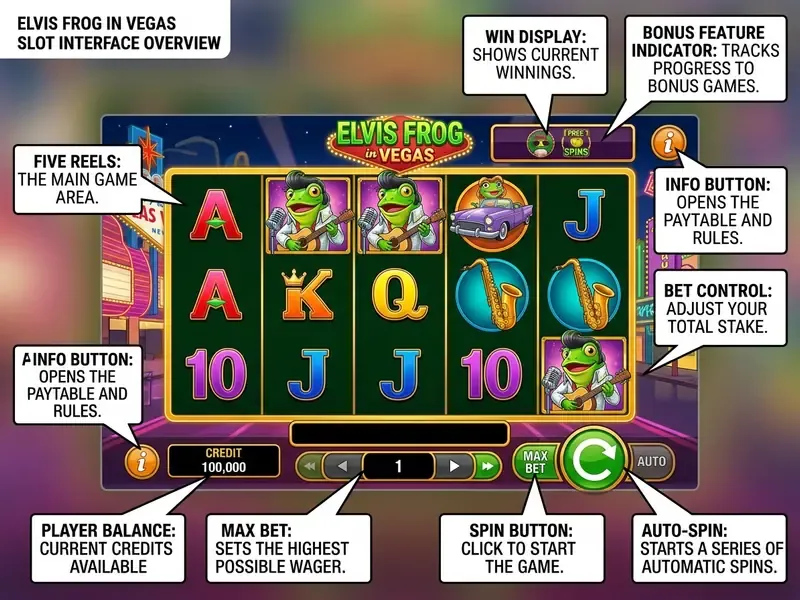
4. Do not read the bonus drought as a signal. Bonus rounds, free spins or Coin Respin, arrive on the order of once every 120–150 spins on average in our observed play. That is an empirical observation from session logging rather than a certified hit-frequency figure, and it varies by configuration. Critically, every spin is independent under the RNG. A 400-spin drought does not make the next spin more likely to pay, and raising your stake to "recover" is the single most expensive mistake available in this game.
5. Pre-commit both stops. Set the autoplay loss limit and the single-win stop before you start. Decide the win figure at which you cash out and the loss figure at which you close the tab, then put both into the autoplay panel where the software enforces them for you.
6. Treat the 96% RTP as a long-run cost, not a target. At 96% and $1.00 per spin, the theoretical cost of 500 spins is about $20, but the distribution around that figure is enormous on a high-volatility game. Budget the theoretical cost as entertainment expenditure and assume you will not see it back.